

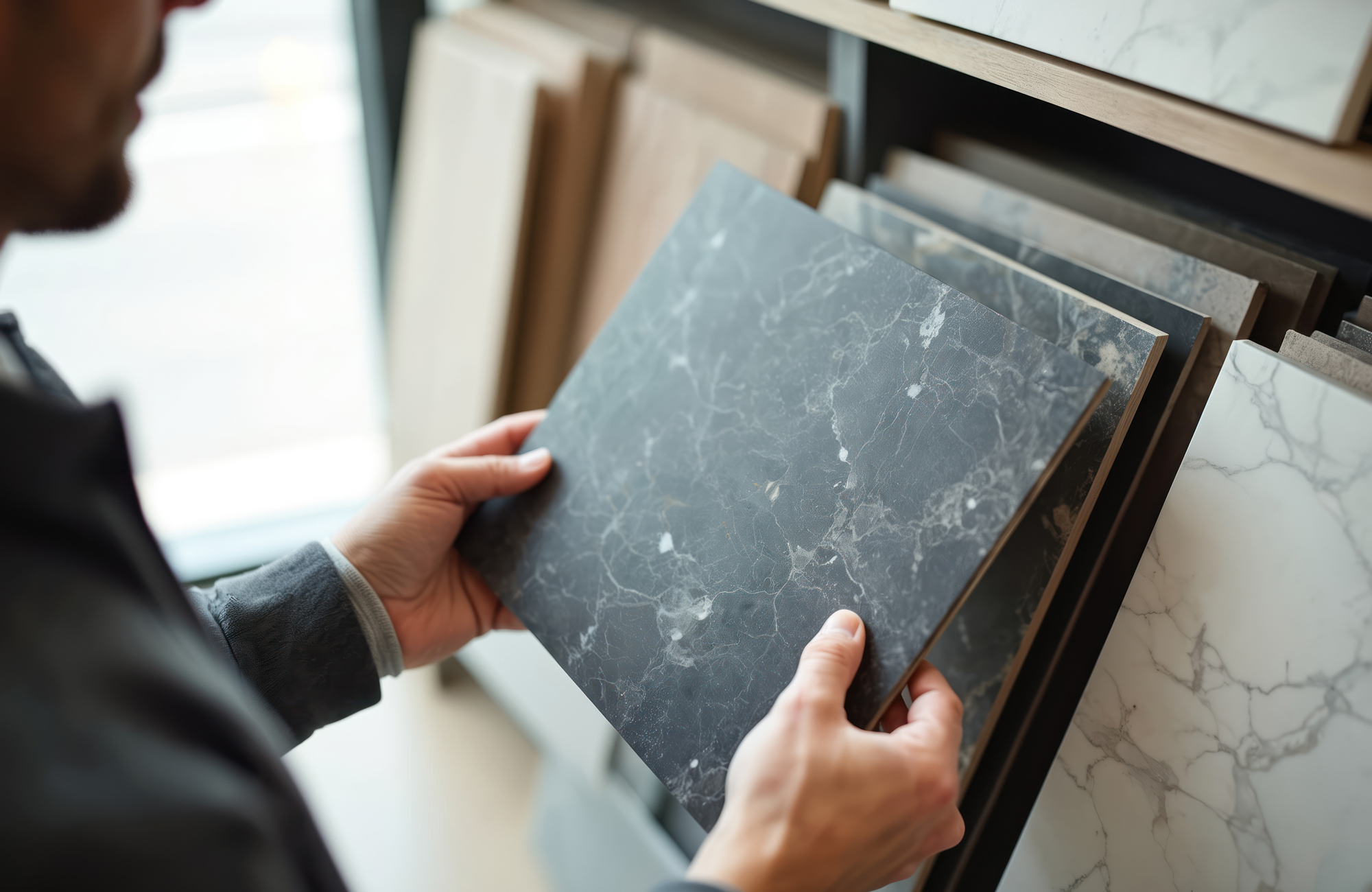
If you're a Tucson homeowner comparing flooring options, you've likely found yourself weighing luxury vinyl plank (LVP) against porcelain or ceramic tile. Both are excellent choices, but here in the Sonoran Desert, your flooring faces challenges that homeowners in other parts of the country simply don't encounter.
With summer temperatures regularly exceeding 110°F, monsoon humidity swings, and intense UV exposure from our 280+ sunny days per year, not all flooring performs equally in Tucson, Oro Valley, Green Valley, Marana, and surrounding communities.
At Valle Interiors, we've helped thousands of Southern Arizona families choose the right flooring for their homes. As a family-owned Tucson business, we carry both extensive LVP collections and over 2,500 tile options from Dal-Tile, Arizona Tile, Emser, and Marazzi.
This means we're not here to push one product over another, we're here to help you make the best decision for your specific situation.
Let's break down how LVP and tile compare in the areas that matter most to Arizona homeowners.
Understanding Your Options: LVP vs. Tile Basics
What is Luxury Vinyl Plank (LVP)?
Luxury vinyl plank is engineered flooring designed to replicate the look of hardwood while offering superior water resistance and easier maintenance. Modern LVP consists of multiple layers: a wear layer for scratch protection, a decorative layer with realistic wood-grain imagery, a core layer for stability, and typically an attached underlayment.
Critical for Arizona: Not all LVP is created equal in desert climates. The core material matters significantly. At Valle Interiors, we specifically carry products with advanced core technologies designed to handle temperature extremes:
Mohawk Solidtech features an SPC (Stone Plastic Composite) rigid core that's 50% denser than average composite flooring. According to Mohawk's technical specifications, this core maintains dimensional stability under heat and extreme temperature changes, an essential feature when Tucson's outdoor surfaces can reach 150°F in summer.
Mohawk PureTech offers an eco-friendly alternative with a Renewable Polymer Core (RPC) made from 70% recycled content and 80% plant-based materials. It's PVC-free and 3x more scratch-resistant than traditional vinyl, backed by a lifetime waterproof warranty.
What is Porcelain and Ceramic Tile?
Tile flooring is made from natural clay materials shaped and fired in kilns at extremely high temperatures. Porcelain tile, specifically, is crafted from refined clays and fired at 2,200-2,500°F, creating an exceptionally dense, durable material that's virtually impervious to water (absorption rate less than 0.5%).
This high-firing process is why porcelain excels in Arizona's heat. As the Tile Council of North America notes, porcelain tile is harder than granite and rated noncombustible under ASTM E136 standards. When you're looking at flooring that will endure decades of desert summers, these specifications matter.
The Arizona Climate Factor: Heat, UV, and Monsoons
This is where the LVP vs. tile decision gets uniquely Arizona-specific. Let's examine how each material handles our desert challenges.
Extreme Heat Performance
Tile Advantage: Porcelain tile is essentially born in fire, fired at temperatures exceeding 2,200°F during manufacturing. This means Tucson's 110°F+ summer days pose zero threat to the tile's structural integrity. Tile won't warp, expand, contract, or degrade regardless of temperature.
LVP Consideration: Quality LVP with SPC cores (like Mohawk Solidtech) handles Arizona heat well when properly installed. However, installation matters: Mohawk's technical guidelines specify using a 5/8" expansion gap in areas exposed to temperatures greater than 85°F, versus the standard 1/4" gap. That’s why it’s important to hire a licensed installer who knows the specific LVP product they’re installing and understands Tucson’s climate, so the floor has room to expand and stays stable over time
Thermal Expansion and Temperature Swings
Tucson experiences dramatic 30-40°F temperature swings between day and night, especially during shoulder seasons. This constant expansion and contraction cycle puts stress on flooring materials.
Tile: Maintains complete structural integrity regardless of temperature fluctuations. The thermal shock resistance from the high-firing process means tile won't crack or deteriorate from rapid temperature changes.
LVP: SPC-core products handle temperature swings well due to their rigid construction. The stone composite material resists cupping and gapping. However, traditional WPC (wood plastic composite) LVP may show more movement in extreme conditions.
UV Exposure and Fading
With 280+ sunny days per year and high-altitude sunlight, UV exposure is a genuine concern for Tucson flooring.
Tile: Excellent UV resistance. Porcelain tile won't fade, discolor, or deteriorate from sun exposure. This makes it ideal for sunrooms, covered patios, and rooms with large south-facing windows.
LVP: Modern LVP includes UV-resistant wear layers, but prolonged direct sunlight exposure over years may cause some fading in lower-quality products. Using window treatments in sun-drenched rooms helps preserve appearance.
Monsoon Season Moisture
In Tucson, monsoon storms can show up fast—one minute it’s dry, the next you’re dealing with wet shoes, damp entryways, or a small puddle from a blown-in rainstorm. That’s exactly why “waterproof” matters—but not just on the surface.
Both high-quality LVP and porcelain tile can handle humidity and everyday splashes. The real difference shows up when moisture gets under the floor. That’s when you can see issues like swelling, odors, or loosening over time—especially with floating systems if moisture gets trapped.
That’s why installation matters so much here in Southern Arizona.
Tucson’s heat swings and seasonal moisture mean the “standard” install approach from milder climates doesn’t always hold up. A local pro will plan for things like:
Heat expansion space: Many LVP lines require larger expansion gaps here (for example, Mohawk notes up to 5/8"gaps when spaces exceed 85°F, vs. a typical 1/4" guideline).
Acclimation: Flooring needs time to adjust before it’s installed (often around 48 hours for LVP in the right indoor temp range).
Moisture-aware layers: Choosing the right underlayment or moisture barrier based on your home (slab vs. raised floor, entry exposure, etc.).
Arizona-appropriate setting materials: For tile, using adhesives/thinsets that can handle our temperature extremes.
At Valle Interiors, our installation team is used to building floors for Tucson homes—not generic conditions. And because we follow manufacturer guidelines, your warranty coverage is protected.
Key Factors You Should Consider
As you weigh LVP vs. tile for your Tucson home, consider:
How long do you plan to stay in your home? If it's 10+ years then tile's longevity may offer better value.
What rooms are you flooring? High-heat areas (kitchens, sunrooms) favor tile; comfort areas (bedrooms, family rooms) favor LVP.
What's your budget flexibility? LVP offers excellent performance at lower upfront cost.
Do you have pets or young children? LVP's softer surface may be more comfortable; tile's durability handles heavy traffic.
Are you prioritizing eco friendliness? Mohawk PureTech's 70% recycled, PVC-free construction offers a sustainable LVP option.
See Both Options at Valle Interiors
The best way to decide between LVP and tile is to see and feel both options in person, you can do this by dropping by our Tucson showroom!
Can't make it to the showroom? Our shop-at-home service brings samples directly to your home in Tucson, Oro Valley, Green Valley, Marana, SaddleBrooke, Catalina, Casas Adobes, or Sahuarita, so you can see how different flooring looks in your actual space and lighting.
Ready to explore your options? Call us at (520) 467-4198 to get more details or request a free estimate through our website
Frequently Asked Questions
Q: Can LVP handle Tucson's 110°F+ summer heat?
A: Yes, but quality matters. LVP with SPC (Stone Plastic Composite) cores, like Mohawk Solidtech, maintains dimensional stability in extreme heat. Avoid budget LVP with traditional cores in Arizona.
Q: Which flooring is better for homes with pets?
A: Both work well. Mohawk's PureTech is 3x more scratch-resistant than traditional vinyl and includes an All Pet warranty. Porcelain tile is virtually scratch-proof but offers a harder surface.
Q: Does tile feel cold in winter?
A: Tile conducts temperature, so it feels cool in summer (a benefit!) but can feel cold in winter. Area rugs or radiant floor heating solve this. LVP naturally feels warmer underfoot year-round.
Q: Which has better resale value in the Tucson market?
A: Quality tile typically offers higher resale value, especially in kitchens and bathrooms. However, well-maintained LVP is increasingly accepted by buyers, particularly in bedrooms and living areas.
Q: How do monsoon humidity changes affect these flooring types?
A: Both quality LVP and porcelain tile are 100% waterproof and unaffected by humidity fluctuations. The key is proper installation with appropriate expansion gaps for LVP and proper grouting for tile.


