

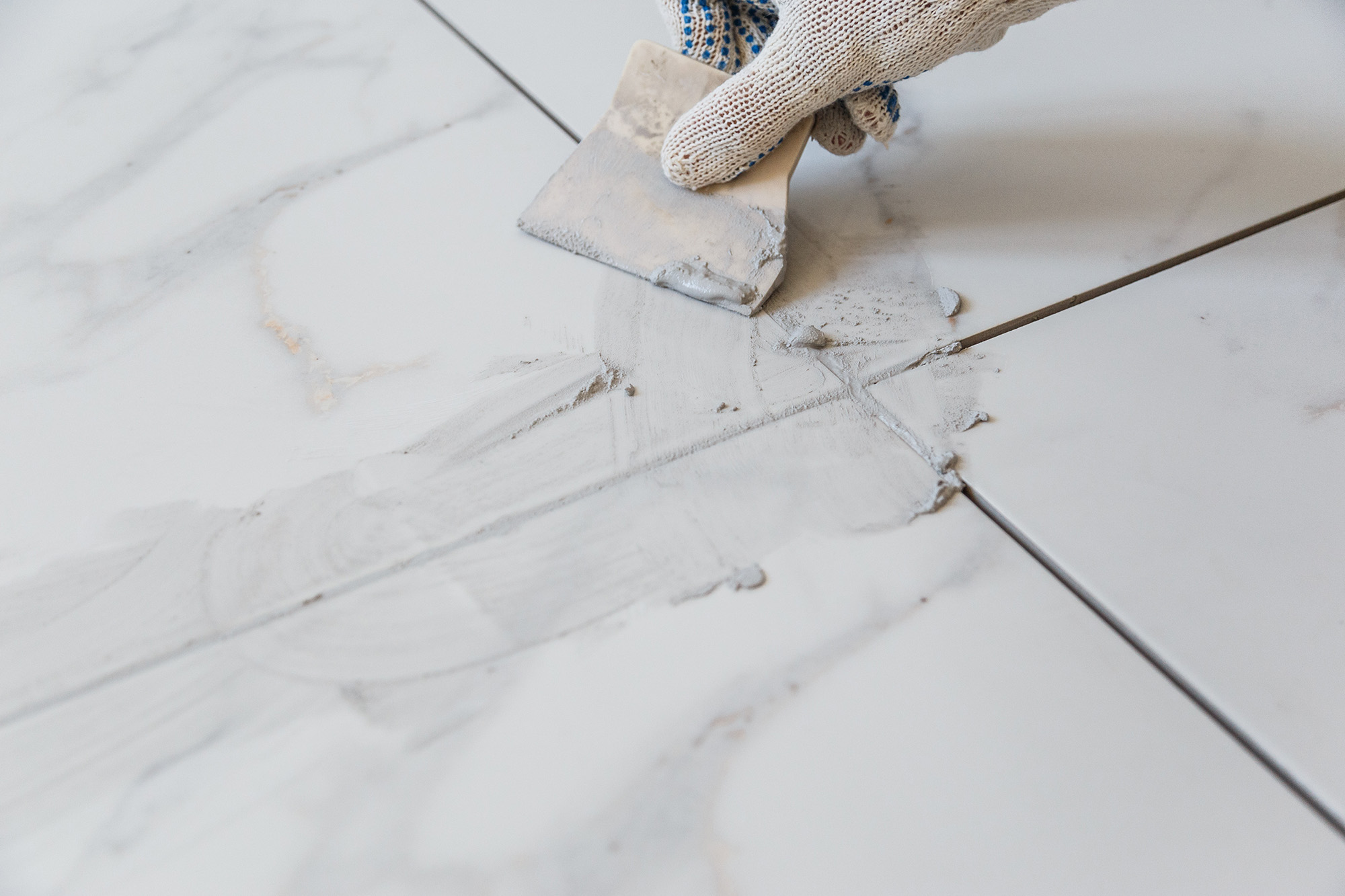
The first big storm of the season hits. Doors open, pets rush in, kids forget to take off their shoes, and suddenly there’s a trail of muddy water across your tile. The tile itself shrugs it off—but the grout lines and caulk joints are another story. In our desert climate, they quietly take the brunt of monsoon moisture, hard water, and temperature swings. If you want your floors to look good for years, caring for those small lines around and between your tile matters more than most people realize.
Grout vs. Caulk: Who Does What on Your Floor?
Grout and caulk often get talked about together, but they play very different roles.
- Grout fills the joints between tiles, locking them in place and helping distribute weight across the floor. It’s rigid once cured.
- Caulk (or flexible sealant) is used where tile meets another material or where the surface changes direction—like at the base of a shower, along a tub, or where tile meets a cabinet toe-kick.
During monsoon season, those joints see repeated cycles of moisture, then rapid drying in 100°+ heat. Grout can develop hairline cracks, and lower-quality caulks may shrink or pull away. That’s when water starts slipping underneath your tile, leading to loose pieces, efflorescence (that white powdery look on grout), or even musty odors.
If you’re planning new ceramic or porcelain floors, it helps to look at tile styles and patterns with grout joint width and color in mind. Tighter joints and the right grout color can make maintenance easier and hide light surface staining from minerals and dust.
How Monsoon Moisture Attacks Grout Lines
Our storms don’t behave like gentle showers. They show up fast, dump a lot of water, and leave behind humidity that our homes aren’t used to. That combination affects grout in a few specific ways:
- Muddy foot traffic grinds grit into the joints, acting like sandpaper.
- Hard water from mopping or cleaning leaves mineral deposits that dull and discolor the surface.
- Humidity spikes cause small movements in concrete slabs that can stress already-weakened grout.
Over time, you may see darkened joints near doors, hairline cracks where rooms transition, or crumbly spots around floor vents. In bathrooms, standing water near the tub or shower entry can accelerate all of this.
Homeowners thinking about a larger refresh often address these weak points as part of complete bathroom remodeling services, combining updated tile, fresh grout, and new fixtures so everything is sealed and watertight from the start.
Choosing the Right Caulk and Sealers for Desert-Monsoon Cycles
The caulk around the perimeter of your tile and in wet areas has to handle a strange combo: months of dry heat, then sudden bursts of moisture. That’s why material choice matters.
For floors and showers, we typically recommend:
- High-quality, flexible caulk (often 100% silicone or a matching color sealant) at all changes of plane—where floors meet walls, tubs, shower curbs, or cabinets.
- Penetrating grout sealer on cement-based grout, especially near exterior doors, kitchens, and baths.
Silicone may be a bit more finicky to work with, but it handles movement and humidity much better than cheap latex caulks. Around walk-in showers or curbless entries, pairing flexible sealant with custom shower design options and proper waterproofing creates a full system that can handle years of monsoon seasons.
If you’re mixing materials—say, tile floors with a stone threshold or a different surface in an adjacent room—keep in mind that each material expands and contracts differently. In those transitions, a flexible joint is your friend.
Simple Maintenance Habits Before and After the Storms
You don’t need to baby your tile floors, but a few smart habits go a long way in homes across Oro Valley, Green Valley, and nearby communities:
- Add sturdy entry mats outside and inside to catch most of the mud and grit before it reaches the grout.
- Vacuum or sweep regularly so dust and sand don’t grind into the joints.
- Mop with a neutral cleaner and soft pad; avoid harsh acids that eat away at grout and sealer.
- After heavy storms, check door thresholds, sliding glass entries, and low spots for any new cracks or gaps in caulk.
- Reseal cement-based grout every 1–3 years, depending on traffic and cleaning products.
If you’re considering changing out flooring in just one part of the house, it can help to look at luxury vinyl plank options or other water-resistant materials for laundry rooms and secondary entries that see the most wet shoes and pet traffic. That way, your tile in main living areas deals with less of the worst abuse.
For bigger projects where you’re coordinating floors with new vanities or storage, our designers can help you tie grout colors and tile layouts to kitchen and bathroom cabinetry so seams and joints feel intentional, not like an afterthought.
Keep Your Tile Floors Ready for Every Season
Tile is one of the toughest surfaces you can put on a concrete slab, but grout and caulk are the small details that decide how well that floor handles years of monsoon mud, hard water, and desert dust. Choose the right materials, keep them sealed, and do quick visual checks after big storms, and your floors will stay solid and easy to clean.
If you’d like help evaluating problem spots, planning new tile layouts, or pairing floors with a larger remodel, you can request a free estimate and we’ll walk you through options that make sense for your home and our Sonoran climate.


