

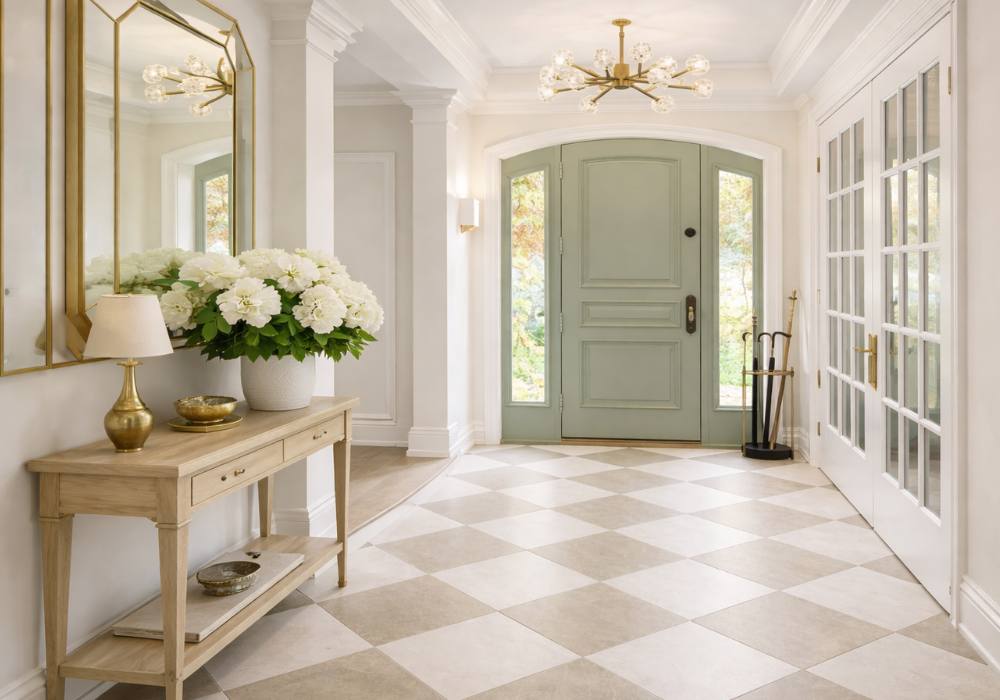
Picture a summer monsoon rolling in just as guests walk up to your front door. One minute it’s dust and 105°, the next it’s wind, rain, and muddy shoes on your entry or patio. That’s the reality in our part of Southern Arizona—and it’s exactly why the material you choose underfoot matters.
Entryways and outdoor living areas have to handle heat, grit, water, and constant foot traffic without becoming slick or looking worn in a year. Natural stone and porcelain tile are two of the most popular choices, but they behave very differently once they’re installed.
How Each Material Handles Desert Weather
Both natural stone and porcelain are hard surfaces, but they react to the Sonoran Desert in different ways.
Porcelain tile is man‑made, fired at extremely high temperatures until it becomes dense and almost completely non‑porous. That density makes it excellent at shrugging off monsoon splashes, muddy paw prints, and the fine dust that blows in during storms. UV exposure is also less of a concern—color runs through the body of the tile or is baked onto the surface, so fading is minimal.
Natural stone—travertine, slate, marble, and similar materials—brings real variation and character, but most varieties are more porous. In a hot, dry climate with sudden downpours, that means:
- Regular sealing to resist moisture and staining
- More sensitivity to hard‑water deposits where rain dries on the surface
- Potential for surface wear if wind‑blown grit isn’t cleaned up
If you’re comparing specific stone looks against porcelain alternatives, it helps to browse side by side. Our online catalog lets you compare tile styles and patterns with realistic stone visuals, so you can see how close today’s porcelain comes to the real thing.
Safety and Comfort in Entryways and Patios
Front doors, back patios, and covered porches are all high‑traffic zones. They also see wet shoes, pool water, and the occasional spilled drink, so slip resistance matters just as much as appearance.
Outdoor‑rated porcelain often comes with textured, matte surfaces designed to add grip, even when damp. For interior entries, honed or lightly textured finishes strike a balance—smooth enough to mop easily, but not polished to a mirror shine that becomes slick with water.
Natural stone can be very safe underfoot when finished properly. A honed or tumbled travertine, for example, offers good traction and a soft, natural feel. The trade‑off is maintenance: those same textures that provide grip can collect dust and need more attentive cleaning, especially in areas with frequent dust storms.
If you already have other hard surfaces—like quartz or granite in the kitchen—it can be helpful to think about how floor texture will tie into those finishes. Our overview of quartz, granite, and porcelain countertops can give you a sense of how different materials work together in one cohesive design.
Maintenance, Staining, and Long‑Term Costs
Entryways and patios take the brunt of daily life: muddy shoes from the garden, red clay dust, mineral‑heavy water spotting after a storm. The way each surface cleans up will affect how you feel about it a year or five years from now.
Porcelain tile:
- Resists staining from tracked‑in dirt and spills
- Doesn’t require sealing
- Usually needs only sweeping and mopping with a neutral cleaner
Natural stone:
- Needs periodic sealing to protect against stains and etching
- Can react to acidic cleaners or spilled drinks
- Shows mineral buildup more readily in unsealed pores
Over time, that difference in upkeep often makes porcelain more budget‑friendly, even if the upfront material cost is similar. If you love the look of real stone, consider reserving it for more sheltered areas while using natural stone flooring options in spots where you’re comfortable with a bit more care and patina.
For busy households—or for homeowners in 55+ communities who want low‑maintenance living—this is where porcelain really earns its keep. It offers a consistent, easy‑to‑clean surface that still delivers a high‑end look.
Design Flexibility from Front Door to Outdoor Living
Entry floors and patios shouldn’t feel like separate worlds. Ideally, the material at your front door flows naturally into your main living spaces, and the surface just outside the slider echoes what’s inside.
Porcelain’s big advantage is variety. Wood‑look planks, concrete‑style slabs, and stone‑inspired patterns can all be mixed to create subtle transitions without changing materials. That’s especially helpful if you’re tying an entry into adjacent areas finished in luxury vinyl plank options, where you might want similar color and grain without copying the exact texture.
Natural stone offers its own design strengths—unique veining, one‑of‑a‑kind variation, and an organic feel that suits desert landscapes. In some homes, combining porcelain in the highest‑wear zones with stone accents or insets creates a smart balance of durability and character. If you prefer to see how those combinations come together in real projects, you can explore examples of completed projects for inspiration.
Choosing What’s Right for Your Home
In this climate, porcelain is usually the best all‑around choice for exposed patios and busy entryways because of its durability, low maintenance, and resistance to heat, moisture, and dust. Natural stone is ideal when you value authentic character and are comfortable with sealing and a bit more day‑to‑day care.
The right answer for your home depends on how you live, how much maintenance you want, and how your entry and patio connect to the rest of your spaces. If you’d like help comparing specific products, finishes, and textures for your own project, you can request a free estimate, and we’ll walk you through options that make sense for your entry, patio, and lifestyle.


