

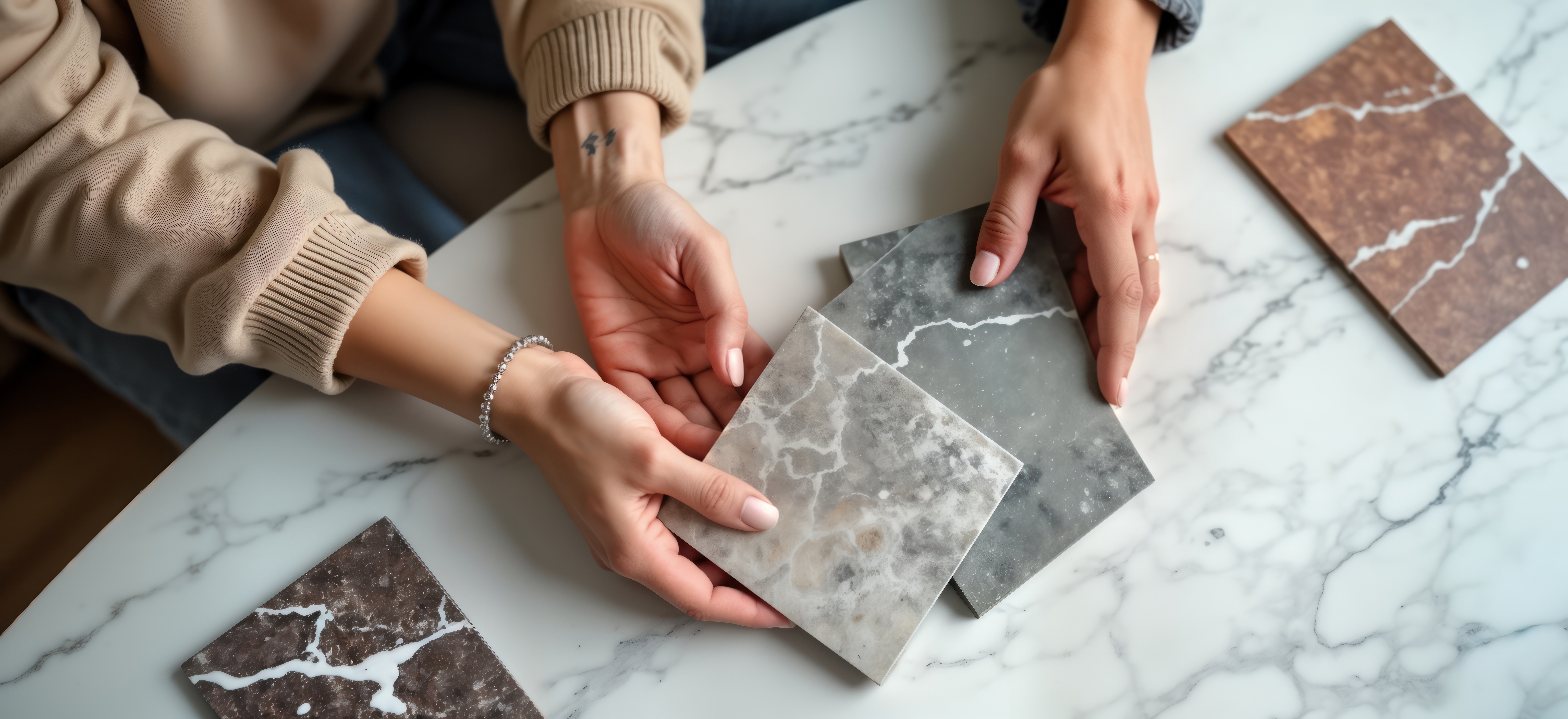
You feel it every summer: the slab is hot, the air is dry, and your floors take a beating from grit, pets, and everyday life. When you’re choosing tile for a home in the Sonoran Desert, the question usually comes down to porcelain vs ceramic. Both look similar on the surface, but they behave differently once the thermometer hits triple digits and monsoon season rolls in.
Below, we’ll walk through how each material is made, how it performs in our climate, and where each one makes the most sense in your home.
How Porcelain and Ceramic Are Different at Their Core
Porcelain and ceramic are both made from clay and fired in a kiln, but porcelain is denser and less porous. It’s fired at higher temperatures and compressed more tightly, which gives it a harder body and lower water absorption. Ceramic uses a less refined clay and isn’t fired quite as hot, so it stays a bit lighter and more absorbent.
In practical terms, porcelain handles moisture, temperature swings, and heavy use better, while ceramic is easier to cut, install, and often more budget-friendly. When you compare porcelain and ceramic tile options, you’ll notice similar colors and patterns, but the performance specs tell you which one really fits your space.
Heat, Sun, and Concrete Slabs: Performance in a Desert Home
Most homes in this region sit on concrete slabs, which means your tile is bonded directly to a surface that can get very hot during the day and cool quickly at night. Porcelain’s dense body makes it more stable over these temperature changes, so it’s less likely to crack or chip in high-traffic areas like kitchens, hallways, and great rooms.
Ceramic still does well indoors, but it’s a bit softer and more prone to surface wear if you drag furniture or deal with a lot of sand and grit from dust storms. In family rooms or bedrooms where traffic is lighter, a good quality ceramic can perform just fine while keeping costs down.
If you love the look of stone but want something cooler underfoot, desert homes often mix porcelain with natural stone flooring options in select areas. Porcelain can mimic travertine or slate beautifully in the busiest rooms, while real stone becomes a feature in smaller spaces or accent areas.
Monsoon Moisture, Hard Water, and Cleaning Realities
From July through September, monsoon storms bring sudden humidity and tracked-in water. In bathrooms, entryways, and laundry rooms, porcelain’s low water absorption makes it the safer pick. It resists swelling, staining, and long-term moisture damage better than most ceramic, which is why many homeowners choose it for showers and wet zones.
Hard water is another reality here. Mineral deposits build up on grout lines and tile surfaces over time. Smooth, dense porcelain is easier to clean because minerals sit more on the surface instead of soaking in. Ceramic can still work well, but it usually benefits from a bit more sealing and regular maintenance, especially on unglazed or textured finishes.
If you’re planning a full bath update, it often makes sense to coordinate floor and wall tile with complete bathroom remodeling services so the vanity, shower, and flooring all handle moisture and hard water in the same smart way.
Style, Comfort, and Where Each Tile Makes Sense
Both porcelain and ceramic come in wood-look, stone-look, and solid colors that fit desert-modern or Southwestern aesthetics. The difference is often where you put them.
- Use porcelain in main living areas, kitchens, entries, and any space that sees lots of foot traffic, pets, or frequent mopping.
- Save ceramic for guest rooms, offices, or accent walls where you want to stretch the budget without sacrificing style.
For homeowners who like to see how finishes work together, browsing tile styles and patterns alongside other materials can make decisions easier. Matching floors with quartz, granite, and porcelain countertops or cabinet finishes helps the whole home feel intentional rather than pieced together.
Choosing the Right Tile for Your Desert Home
In the Sonoran Desert, porcelain usually wins for durability, moisture resistance, and long-term peace of mind, especially on concrete slabs and in busy spaces. Ceramic still has a strong place in lower-traffic rooms and on walls where comfort, cost, and style matter more than maximum toughness.
If you’d like help deciding what belongs where, our team can walk you through real samples, explain specs in plain language, and design a layout that fits how you actually live. When you’re ready to start, you can request a free estimate and we’ll help you plan tile that works with the desert instead of fighting against it.


