

You notice a few cracked tiles in the kitchen. One corner of the living room sounds hollow when you walk across it. A couple of grout lines are dark from years of dust and monsoon moisture. Now you’re wondering: is this a simple repair, or is it time to bite the bullet and replace the whole tile floor?
In desert homes built on concrete slabs, that decision isn’t always obvious. Heat, hard water, and shifting slabs all play a role. The right choice depends less on one broken piece and more on what the floor is telling you as a whole.
When a Simple Tile Repair Makes Sense
If the damage is limited and the rest of the floor is performing well, repair is usually the smarter, more budget‑friendly move.
Repairs are often enough when:
- Only a few tiles are cracked or chipped from impact, like dropping a pan.
- Grout is stained or missing in spots, but the tiles are still firmly bonded.
- One or two tiles sound slightly hollow, yet there’s no movement when you step on them.
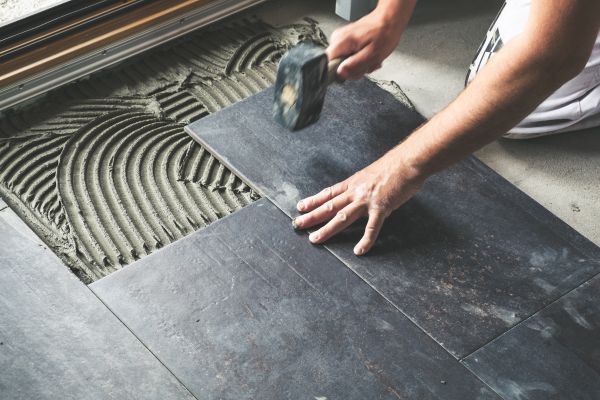
In these situations, we can carefully remove and replace individual pieces, re‑grout, and blend the repair into the surrounding pattern. Homeowners who still love their floor’s color and layout can often extend its life this way, especially if they originally chose durable porcelain or ceramic. If you’re considering matching an older style, it can help to browse current porcelain and ceramic tile options to see how close today’s patterns come to what you already have.
Key idea: if the issue is cosmetic and localized, and the tile is otherwise solid underfoot, repair is usually enough.
Red Flags That Point Toward Full Replacement
There are times when patching a few pieces is like putting a Band‑Aid on a bigger structural problem. Our slab‑on‑grade construction, combined with 100°+ heat and monsoon moisture swings, can stress both the concrete and the thinset underneath your floor.
Think seriously about full replacement if you notice:
- Widespread hollow sounds. If large areas sound drummy or you feel movement underfoot, the bond between tile and slab is failing. That can lead to more cracks over time.
- Multiple cracks in a pattern. Long, straight cracks that run across several tiles may indicate slab movement rather than one unlucky impact.
- Loose or tented tiles. If corners lift or tiles “tent” up in the middle of a room, there’s pressure or failure in the installation that repairs won’t truly fix.
- Severe or crumbling grout. When grout is missing or powdery across much of the floor, moisture and dust have already worked their way under the surface.
At that point, replacing only a handful of pieces often means you pay for repeat service calls as new failures show up. A new installation also lets you address layout, transitions, and expansion joints correctly so your next floor handles the desert environment better than the last. Some homeowners use that opportunity to switch rooms that stay cooler with tile and areas like bedrooms to laminate flooring options for a softer feel.
Rule of thumb: when problems are widespread, repeating, or clearly tied to movement in the slab or failure in the original install, replacement is the long‑term solution.
Considering Age, Style, and Everyday Comfort
Even if your tile is technically “fixable,” it might not be worth saving forever. Many homes in areas like Oro Valley and Green Valley still have floors that were installed 15–25 years ago. The tile may be intact, but:
- The color or pattern dates the whole house.
- Tiny grout joints make cleaning harder in a dusty, hard‑water environment.
- The layout doesn’t match how you actually live in the space now.
In those cases, the question shifts from “Can we repair it?” to “Does this floor still serve you?” A new installation allows for larger formats, thinner grout lines, and modern stone‑ or wood‑looks that still perform well on concrete slabs. Some families also pair a new main‑floor installation with updated kitchen and bathroom cabinetry so surfaces and storage all feel intentional together.
If you’re not sure you want tile again in every room, you can also compare luxury vinyl plank options for spaces where warmth, sound absorption, or softer landings underfoot matter more than the cool feel of porcelain.
Ask yourself: if you’re investing in labor anyway, will you be happy looking at this same pattern for the next decade?
How We Help You Decide
From Casas Adobes to Sahuarita, we start with what’s already in place. That means checking the bond to the slab, looking for repeating crack patterns, and listening for hollow spots rather than guessing from one chipped corner.
If your floor is a good candidate for spot repairs, we’ll say so. If the better investment is a full replacement, we’ll walk through material choices, grout colors, and maintenance so you know what to expect long‑term. Seeing real‑world photos can help, so many homeowners like to review examples of completed projects to visualize how a new floor might tie into their kitchen, bathrooms, and hallways.
When you’re ready to find out whether your tile can be saved or should be replaced, you can request a free estimate, and we’ll take a careful look at your specific floor, not just the most obvious crack.


