

What most Tucson homeowners don't realize: that beautiful new tile, luxury vinyl plank, or hardwood floor could lose its warranty protection the moment it's installed wrong. Here's what you need to know before your next flooring project.
You've done your research. You've compared products, agonized over colors, and finally selected the perfect flooring for your Tucson home. Maybe it's a porcelain tile that can handle Arizona's summer heat, or a waterproof luxury vinyl that won't buckle during monsoon season. The manufacturer warranty gave you confidence—lifetime coverage on the wear layer, protection against manufacturing defects, even labor cost reimbursement if something goes wrong.
But here's what the sales associate probably didn't mention: most flooring warranties have a critical clause buried in the fine print. If your floor isn't installed by a qualified professional following the manufacturer's exact specifications, that warranty protection can disappear entirely.
This isn't a minor technicality. It's a distinction that could cost you thousands of dollars if a problem develops with your floor.
The Hidden Cost of DIY Installation
Major flooring manufacturers structure their warranties to reward professional installation—and penalize DIY attempts. The difference isn't subtle.
Take luxury vinyl plank flooring, one of the most popular choices for Arizona homes due to its heat resistance and waterproof properties. When professionally installed, many manufacturers cover reasonable labor costs for warranty claims during the first several years of ownership. Install it yourself, and you're looking at material coverage only—no labor reimbursement whatsoever.
For laminate flooring, the stakes are similar. Warranty documents often explicitly state that labor costs are covered only when the product was "originally professionally installed." That distinction matters when you're facing a $3,000 to $5,000 reinstallation bill because your locking joints failed or moisture damage crept in through an improper perimeter seal.
With tile, the warranty gap becomes even more pronounced. Standard manufacturer warranties typically provide one year of limited coverage. But when tile is installed by a contractor holding advanced industry certifications, those same products can carry warranties of five years for ceramic and up to ten years for porcelain.
That's not a minor upgrade—it's the difference between a floor that's protected through its most vulnerable settling period and one that leaves you exposed almost immediately.
The bottom line: that "money saved" on DIY installation often evaporates the moment something goes wrong.
The Five Installation Errors That Void Your Warranty
Warranty claims get denied for specific, documented reasons. Understanding what voids your coverage helps explain why manufacturers insist on professional installation.
1. Installing Flooring with Visible Defects
Every major manufacturer warranty includes this clause: "Flooring planks or accessories must be checked carefully for material defects before and during installation and under sufficient lighting. Products with visible defects must not be installed under any circumstances."
Professional installers know to inspect every piece before it goes down. That scratched plank, that tile with the hairline crack, that slightly warped board—a pro sets it aside for replacement. A DIYer often doesn't notice until the floor is complete, and by then, the warranty claim is already dead.
2. Improper Subfloor Preparation
This is where Tucson homes present unique challenges. Nearly every home in the Tucson metro area sits on a concrete slab foundation. That slab needs to meet strict flatness standards—typically no more than 3/16 inch variation over any 10-foot span—before flooring goes down.
It also needs proper moisture testing. Not the kind where you tape plastic to the floor overnight, but ASTM-compliant testing that measures moisture at specific depths within the concrete. Installing over a slab that's too wet, too uneven, or inadequately prepared isn't just a recipe for buckling, cracking, or hollow spots—it's an automatic warranty denial.
3. Ignoring Acclimation Requirements
When flooring materials arrive at your Tucson home, they've likely traveled from a climate-controlled warehouse that's nothing like your living room in August. The temperature differential can be dramatic—110-degree delivery trucks to 76-degree interiors.
Manufacturers require acclimation periods for a reason. Luxury vinyl needs 48 to 72 hours at room temperature with boxes opened and planks spread out. Hardwood requires even longer, sometimes a week or more, until it reaches the moisture content appropriate for Arizona's desert climate (typically 6 to 8 percent). Skip this step, and you're not just risking expansion gaps or buckling—you're documenting a warranty violation.
4. Failure to Follow Expansion Joint Requirements
Tucson's 80-degree annual temperature swings create expansion and contraction forces that most flooring installation guides don't fully address. Standard recommendations call for expansion joints every 24 to 32 feet in climate-controlled spaces. In Arizona, particularly in sun-exposed areas like sunrooms, patios, and south-facing rooms, industry best practices recommend joints every 8 to 12 feet.
Professional installers who work in the Arizona market understand these regional requirements. The DIY tutorial you watched on YouTube probably doesn't mention them.
5. Installation Workmanship Errors
Here's the clause that appears in virtually every flooring warranty: "This warranty does not cover damage to the product caused by installation errors. Mohawk does not warrant installer workmanship."
In other words, even if the flooring itself is perfect, how it's installed is entirely on you—unless a qualified professional did the work. Insufficient thinset coverage on tile, improper locking of LVP planks, failure to stagger seams correctly—these are all installation errors that void warranty protection.
Why Big-Box "Professional Installation" Often Falls Short
Some homeowners try to split the difference: buy flooring from a national chain and pay for their "professional installation" service. This approach has its own pitfalls.
Big-box retailers typically subcontract installation work to third-party crews. These installers may be skilled, but they're often working under tight time constraints with crews that vary from job to job.
The installer who measures your space may not be the one who does the work. The crew that shows up might have extensive tile experience but limited familiarity with your specific product's requirements.
More importantly, when something goes wrong, you're caught between two entities pointing fingers at each other. The retailer blames the installer. The installer says the product was defective. The manufacturer says the installation voided the warranty. You're left holding a floor that needs to be torn out and a receipt that doesn't protect you.
This is why working with a single source—a flooring retailer that handles both product selection and installation with their own team—provides accountability that fragmented big box arrangements can't match.
What Professional Installation Actually Includes
Professional flooring installation isn't just about laying material faster than you could. It's a systematic process that addresses every element manufacturers require for warranty compliance.
Pre-installation inspection: Every piece of flooring examined for defects before installation begins, with documentation of any issues found and addressed.
Subfloor assessment and preparation: Proper testing for moisture levels and flatness, with grinding, leveling, or moisture mitigation as needed to meet manufacturer specifications.
Climate-appropriate acclimation: Materials brought to the installation site and allowed to equilibrate to the home's temperature and humidity conditions for the manufacturer-specified period.
Installation per manufacturer guidelines: Every element—thinset application, seam staggering, expansion gaps, perimeter sealing—executed according to the specific product's technical requirements.
Post-installation documentation: Records of the installation process that support warranty claims if issues develop later.
Tucson Specific Installation Considerations
Tucson's Sonoran Desert climate creates installation challenges that don't exist in most of the country. Installers who work here year-round understand the nuances that out of state installation guidelines often do not cover.
Extreme temperature differentials: Materials may arrive at 130 degrees or higher from delivery trucks and need extended acclimation to reach appropriate installation temperature. Summer installations require particular attention to thermal expansion allowances.
Monsoon moisture management: The June through September monsoon season can dramatically affect concrete slab moisture levels. Professional installers know to retest subfloors if significant rain occurs during the installation window.
UV exposure in sun facing rooms: Southern Arizona's intense sunlight accelerates fading and can stress flooring materials in ways that require specific product selection and installation techniques.
Slab on grade construction: The overwhelming majority of Tucson area homes sit directly on concrete slabs, which present different installation requirements than wood subfloors common in other regions. Proper vapor barriers, moisture testing protocols, and adhesive selection all differ from national standard practices.
The True Cost Calculation: Professional vs. DIY Installation
When homeowners weigh DIY against professional installation, they typically compare the cost of labor to zero. That math ignores several factors.
Tool rental and supplies: Tile saws, leveling systems, thinset mixers, knee pads, spacers, and specialty tools add up quickly. For a medium sized tile project, you might spend $300 to $500 on equipment you'll use once.
Material waste: Professional installers typically estimate 10 percent waste for tile and 5 to 10 percent for plank flooring. DIY projects often run higher due to cutting errors and learning curve mistakes.
Time value: A 500 square foot tile installation might take a professional crew one to two days. The same project could consume multiple weekends for a homeowner learning as they go.
Warranty value: This is the factor most DIYers overlook. If labor costs for a warranty replacement run $4 to $8 per square foot, losing that coverage on a 1,000-square-foot floor represents $4,000 to $8,000 in potential exposure. The professional installation that would have cost $2,500 to $4,000 suddenly looks like insurance.
Correction costs: If a DIY installation develops problems—hollow tiles, lippage, moisture damage—fixing it often means tearing everything out and starting over.
You'll pay for removal, disposal, new materials, and professional installation the second time around.
The Valle Interiors Difference
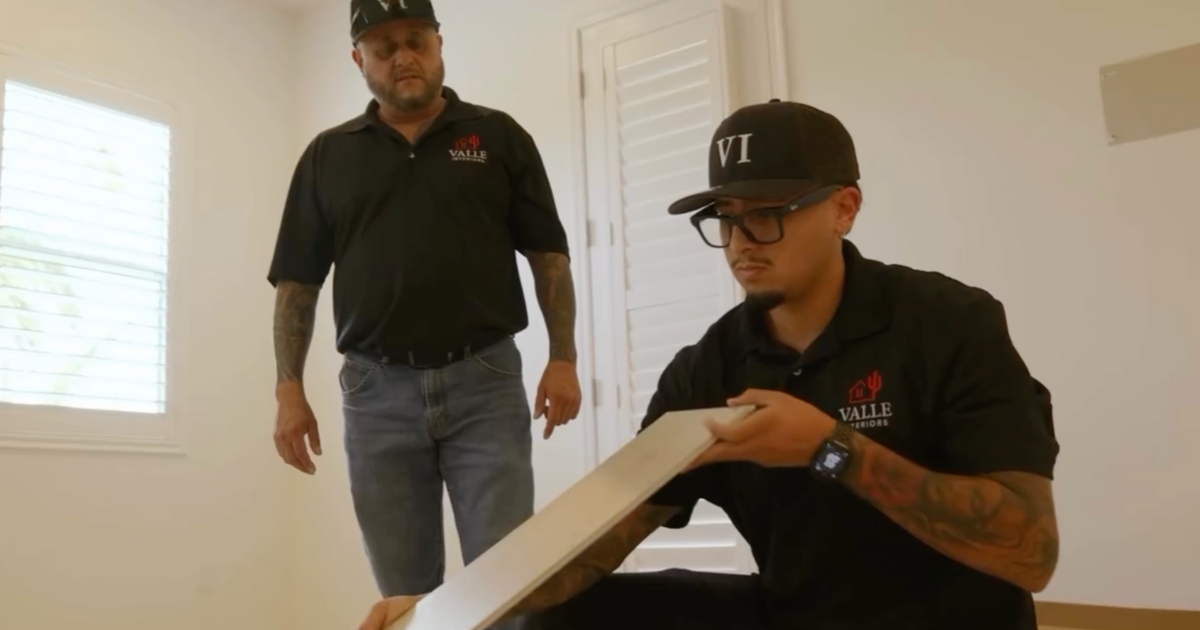
For decades, Valle Interiors has served Tucson-area families with a full-service approach that sets us apart from both big box retailers and installation only contractors.
Licensed Professional Installers
Our installation team consists of licensed professionals who understand Tucson's specific climate challenges.
They've installed thousands of floors throughout Southern Arizona and know firsthand how our conditions affect every material and technique. This isn't subcontracted labor or temporary help—it's skilled craftspeople who take pride in their work.
Full-Service Coordination
Unlike installation-only contractors, Valle Interiors handles your entire project from selection through completion.
Our design consultants help you choose materials suited to your lifestyle and aesthetic preferences. We coordinate delivery timing with installation schedules to ensure proper material acclimation. And because we're a complete home improvement resource—offering cabinets, countertops, and custom showers alongside flooring—we can coordinate multi-room projects efficiently.
Occupied-Home Expertise
Most flooring projects happen in homes where families are living. Our teams understand how to work efficiently while respecting your space, managing dust and debris, and minimizing disruption to your daily routine. We protect adjacent surfaces, coordinate furniture movement, and clean up thoroughly at the end of each workday.
Warranty Protection
Many premium flooring products carry substantial warranties—but only when installed according to manufacturer specifications. Our professional installation ensures your warranty remains intact, protecting your investment for years to come. We know the specific requirements for the product lines we carry, from acclimation protocols to setting material compatibility, and we document our work to support any future warranty claims.
Shop at Home Convenience
Our mobile showroom brings samples directly to your home, where you can see how materials look in your actual lighting conditions against your existing décor. This helps prevent expensive mismatches that occur when selections made under showroom lighting don't work in real world conditions.
Making the Right Choice for Your Tucson Home
Flooring represents a significant investment in your home's comfort, appearance, and value. In Tucson's demanding climate, that investment depends heavily on installation quality. The lowest bid rarely delivers the best value when installation problems lead to premature replacement, warranty disputes, or damage to your subfloor.
When evaluating flooring options for your home, consider not just the product, but the complete installation process:
Who will assess your existing conditions?
How will materials be stored and acclimated?
What experience do the installers have with Tucson's specific challenges?
These questions matter as much as color and style choices.
At Valle Interiors, we invite you to experience the difference professional, full-service flooring installation makes. From your first design consultation through final inspection, we're committed to ensuring your new floors perform beautifully for years to come.
Ready to explore flooring options with an installation that protects your investment?
Visit our showroom at 3684 W Orange Grove Road in Tucson, or request a free estimate to get started.
You can also contact us at (520) 467-4198 —we're here to help you make a choice you'll be happy with for years to come.


